Showing posts with label cars. Show all posts

Tuesday, November 25, 2014

The Future of Cars #2

A network of talking vehicles. 

Now days, electronics talking to each other isn't an uncommon occurrence. The bluetooth speaker telling your smartphone it's running out of battery or your car warming itself up with a push of a button on your smartphone app. It's not much longer until your car will be communicating with all the other cars on the highway on your way to work and home. 
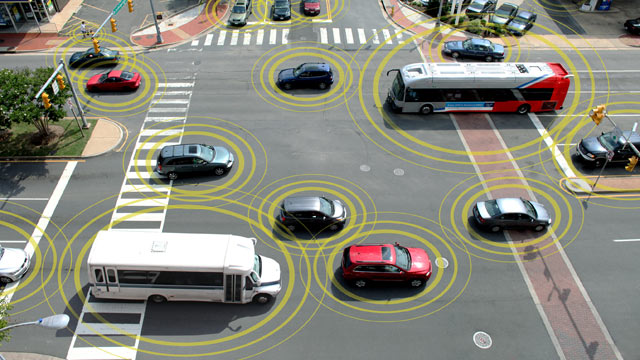
This means that cars will be able to share traffic conditions as well as the weather and road blocks. The speed and direction of your car will also be shared with other vehicles on the road, warning others about potential hazards. This is called vehicle-to-vehicle communication, also known as, V2V. 

Prototypes have already been tested on about 3,000 cars and trucks. These devices send a short range safety signal to other vehicles to find potential accidents. The cars will send a "beep" to other cars when they detect danger, such as when another car enters a intersection, a pedestrian walks by, or another driver is driving way to fast. 

The research team behind this believes that this could get rid of almost 80% of all car wrecks on the road today. It's only a matter of time before this V2V technology is equipped on all vehicles.

Wednesday, November 19, 2014

Google gets Android into Automotive Dashboards

According to the latest news at Google, they say that they are now taking the Android operating system to the cars dashboard (those with touchscreens). Google developers are working on  "Android Auto" software that will work  regardless of the vehicles specific hardware specs. 

Android Auto

Because this is Android, third-party developers will have a chance to make apps or assist with software updates along the side of Android Auto. Although Google isn't alone on this automotive advancement, Apple is also racing down the same road for their own preferred auto enhancements.  

Android users can "simply connect their Android handheld to a compatible vehicle and begin utilizing a car-optimized Android experience that works with the car's head unit display, steering wheel buttons," said Daniel Holle. 

Monday, October 13, 2014

Possibility of Hacking the Modern Car?

On-star services are already capable of bring your vehicle to a halt if needed, but what about the rest of the population?

Technology in cars gets more advanced every year and usually for safety reasons or gadget upgrades which is great. Lane assist, brake assist, parking assist, rear view cameras, pedestrian sensors, and numerous other features are all possible thanks to those internal computers. Although these features are great, all these could be rendered useless and extremely dangerous if hackers found a way around the security.

In the realm of happy thoughts, there has been no evidence that anyone has hacked into auto computer systems. However, this doesn't make it an impossibility. There wasn't a virus for computers the first day the PC was released, it took a while. Fast forward to today and viruses are rampant and constantly attacking are home computers.

Two computer science professors at the University of Washington, Savage and Yoshi Kohno, were able to bypass network security within the car and were able to ignore a drivers input if they wanted (including the brakes and stopping the engine). While this is a good reason to worry, it also took this team about two years to accomplish this and even stated that the chances of anything similar happening to the average person is extremely low.


Thursday, September 25, 2014

Augmented Reality Windshields

Mercedes is creating a virtual reality for the daily driver. An augmented reality dashboard demonstrated at CES in 2012, so the chances of this being made a "reality" in the near future is inescapable. Sometimes, a video can explain more than words ever can.

Whether this will create more or less distractions is arguable. Some say that this is an amazing safety feature because the driver never has to take their eyes truly off the road. On the other side, with so many notifications, updates, or phone calls flying in front of the drivers eyes, does this truly help the driver? Especially when you consider that the driver could leave the phone in their purse/pocket.

The game changer may be self-driving vehicles. Google has already made several prototypes of vehicles that drive by themselves with the help of radar detection, satellite, lasers, GPS, and multiple cameras. With the latest self-driving cars built with augmented reality windshields, the safety aspect might be considered "perfected".


Friday, September 19, 2014

Self-Healing Car Windows

Vehicles are undergoing through a huge amount of stress these to deliver the best possible experience for the drivers. A common problem for daily drivers are small cracks in the windshield that come about, eventually. 

To combat this problem, self-healing (or self-repairing) substances are becoming more and more popular. While you shouldn't expect a completely shattered windshield from a car wreck to magically repair itself, smaller breaks (even bullet holes) could repair itself. Similar experiments have been used with smaller glass screens like cell phones and even plastics. Autoglass is fully charged with improving and making the best possible glass for vehicles. 

For a quick example,  fast forward to 50 seconds and watch the magic happen. 


This is beautiful for not only aesthetic reasons, but it could be a cost effective solution as well. No longer would a driver have to replace the entire windshield from multiple cracks or chips. Neither would they have to worry about the crack growing across the windshield, impairing the drivers view. 

With technology like this thanks to Autoglass, the future advancements of augmented dashboards on vehicles become that much more practical and safe.